 A Word From Michael

Dear Clients and Friends,
It's that time again; time to prepare your 2013 taxes which are due April 15, 2014 for individuals and March 15, 2014 for many corporations. This year there were numerous last minute changes in January to the tax laws that affect both 2013 and 2014.
Some of the changes enacted by Congress include extensions of expiring provisions and some new laws:
- Same sex couples who are legally married are treated as married by the IRS.
- $250 school teacher deduction and tuition & fees deduction extended for 2013.
- The American Opportunity Credit was extended through 2017. This is a tax credit of $2,500 per year for all 4 years of college tuition and related expenses.
- The Mortgage Debt Relief Act extended for 2013 only - this allows taxpayers to exclude income from the discharge of debt on their principal residence.
- The provision allowing for a deduction of Private Mortgage Insurance (PMI) was also extended - 2013 only.
- The Child Tax Credit of $1,000 per child under age 17 was extended.
- The contribution limits for 401(k) increased to $17,000 for under age 50 and $23,000 for age 50+ as well as for other retirement plans for 2013 and 2014.
- The standard business mileage deduction for 2013 was 56.5 cents per mile; it will be 56 cents per mile for 2014.
- The 0% and 15% tax rates for qualified dividends and capital gains were extended. New 20% rate for high income earners
- The Gift Tax Exclusion has increased to $14,000 per person per year in 2013.
- Exemption and Itemized Deductions phased out for high income ($300K-MFJ)
- 2012 high depreciation limits extended for 2013, but no word yet on 2014.
- Simplified method available for Home Office Deduction.
- Taxpayers will pay social security taxes on the first $117,000 of income only.
For Massachusetts Residents:
- If you do not have a "qualified" health insurance plan for the entire year, you may be assessed a maximum penalty of $1,272.
- If you turned 65 before January 1, 2013, you may be eligible for the Massachusetts Senior Circuit Breaker Credit. The maximum credit is $1,030 for 2013.
- Take advantage of the commuter deduction for use of the Fast Lane or purchase of MBTA passes, &340;up to $750 per person), as well as the rental deduction for rent paid.
You may file for an automatic 6 month extension of time to file your tax returns. The extension only grants you additional time to file your tax returns; if you owe more than certain thresholds, the extension may be retroactively denied.
I, along with my staff, Michelle, Kate, Trisha, and Kelsey look forward to seeing our returning clients, as well as new clients that this tax season may bring.
If you have any questions regarding the tax laws and how they affect your particular situation, please contact my office. I look forward to working with you in the upcoming months.
Sincerely,

Michael A. Galer, CPA
|

START YOUR ENGINE...
Staying on the Right Track
...Record Expenses
So what's the best way to keep
good records? It doesn't have to be complicated. Use any recordkeeping
system suited to your business that clearly and accurately
shows your income and expenses.
Your tax records must back up all the tax deductions and credits
you claim on your tax return. Keep careful track of all your
income and where it comes from. It's important to separate
your business and personal receipts and your taxable and non
taxable income.
Be careful if you transfer some of your personal funds into
your business account, essentially making a "loan"
to the business. Keep complete records of the transaction
so that you don't include the money in your taxable business
income by mistake.
Record Expenses
Record your expenses when you actually incur them. It's easy
to forget about some of last year's expenses when your filling
out your tax return. Overlooking deductible expenses can cost
you.
Car Expenses
Its' important to get into the habit of recording
your business milage at the time you actually use your car.
Try keeping a log book in the glove compartment and jotting
down the milage at the beginning and end of each business-related
trip. Record parking fees and tolls, and save your insurance
and repair service.
Payroll Taxes
If you have employees, you must keep all records dealing with
federal employment taxes for at least four years. Make sure
your records include your employer identification number,
the confimation number or tax record from any electronic payments,
copies of the tax returns you filed, and the dates and amounts
of all the employment tax deposits you have made.
Keep track of your employees' social security and Medicare(FICA)
taxes and income tax withholding in the same way: record the
date and amount of the taxes you withheld.
You must also keep a record of federal unemployment (FUTA)
tax you paid. Record the total amount you paid for each employee
and the amount you paid into the state unemployment fund.
Meals and Entertainment
Keep all business-related meals and entertainment receipts.
Indicate the exact business reason for these expenses. Remember,
most meals and entertainment expenses will be limited to 50%
of expenses incurred.
Michael A. Galer, CPA, CFP®
Resource: IRS Publication 1518(Rev. 6-2001)
Catalog Number 1235oz
(Extract from: The Quickfinder Handbook TMI Tax Services,
Inc.)
|
DEAR CLIENTS & PROSPECTIVE CLIENTS
I am authorized by the Certified Financial Planner Board of Standards Inc. (CFP Board) to use the CFP®, CERTIFIED FINANCIAL PLANNER ™ certification marks in accordance with CFP Board certification and renewal requirements.
These marks identify those individuals who have met the rigorous experience and ethical requirements, have successfully completed financial planning coursework and have passed the CFP® Certification Examination.
Sincerely,
Michael A. Galer, CPA
|
|
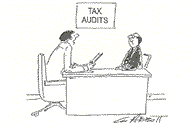
"Let me start by saying
I wish I had your imagination..".
|
Tax Tips...
Don't Miss the Date
Avoid penalties and interest-
check the tax due date,
then file and pay on time.
Get It Right
Know your rights as a taxpayer:
If you cannot pay all of your
tax
when it is due, you may be able
to make monthly installment
payments.
Did you know?
The IRS will not disclose to
anyone
the information you give the IRS,
except as authorized by law.
Do you have a question
about taxes?
E-mail us your tax questions for
"Tax Tips"
Resource: IRS
Publication 1518(Rev. 6-2001)
|
|


 "The
Quill": 2013 Edition
"The
Quill": 2013 Edition